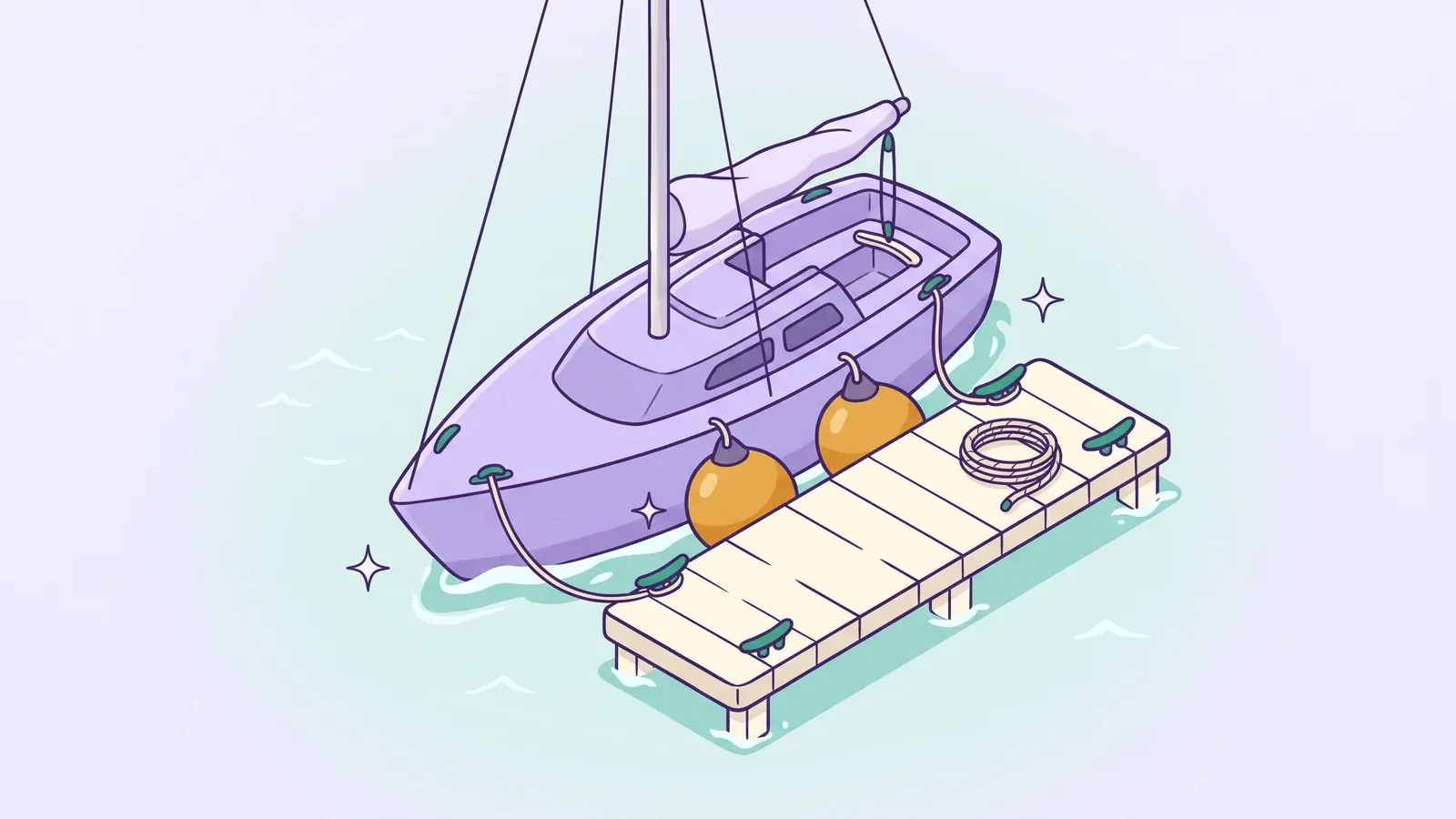
A well-set anchor is the cheapest good night's sleep in sailing. The process is a sequence — choose, calculate, lay, set, verify, watch — and every step is simple. What ruins it is skipping the calculation (tide), the test (reversing on it), or the neighbourly geometry (swing). This guide does the sequence with real numbers, and quotes the official scope figures rather than the internet's arguments.
Choosing the spot
- Shelter: from the wind you have and the wind that is forecast. An anchorage that is perfect now and open to tonight's shift is a trap; check the forecast before the pilot book's pretty photo wins.
- Depth: enough to float you at low water (see the chart-datum guide for the sums), shallow enough that scope is practical. 3–8 m at low water is the sweet spot for most yachts.
- Seabed: charts mark it (S sand, M mud, R rock, Wd weed). Sand and firm mud hold well; rock and dense weed hold badly and snag anchors. Avoid charted cables, moorings — and protected seagrass and coral, where anchoring may be restricted and is destructive; the RYA's guidance is explicit about keeping clear of such habitats.
- Swinging room and neighbours: you need a clear circle (below). Boats on moorings and boats on different rode types swing differently from you.
- Escape: darkness-proof exit path if the wind turns the anchorage into a lee shore.
Scope: the calculation, with the honest disagreements
Anchored yacht with the total height from seabed at high water to the bow roller marked, and the rode running to the anchor.
Why the ratio: an anchor holds by digging in, and it digs best when pulled horizontally along the seabed. More rode out means a flatter pull and, with chain, a heavy curve (catenary) that absorbs snatching. The authorities publish different figures, honestly summarised:
| Source | All-chain | Chain + rope | Multiplies |
|---|---|---|---|
| RYA (Anchoring with care) | 4× | 6× | maximum depth at high water |
| American Sailing | 7:1 “typically… adjusted depending on conditions”; 3:1 calm → 5:1–7:1 as wind builds | same figure quoted | depth + bow height above water |
| BoatUS Foundation | 7:1 recommended; 5:1 sufficient for small craft in good conditions | 7:1 | depth (their examples include bow height) |
Published ratios are starting points with different assumptions, not universal safe minima. Follow the anchor and vessel manufacturer’s guidance, considering seabed, expected weather, rode, depth, bow height and swinging room. More rode may reduce the pull angle but can create a collision or grounding risk. If there is insufficient room for an appropriate scope and swing, choose another spot rather than copying a neighbour’s shorter rode.
Worked example
Study example: depth below the waterline is 4.2 m (after correcting the sounder offset), the expected rise is 1.3 m and the bow roller is 1.4 m above water. The maximum roller-to-seabed distance is 6.9 m. A chosen 5:1 scope needs 34.5 m of rode; 7:1 needs 48.3 m. These ratios are inputs to this calculation, not a recommendation for a particular anchorage. At low water, check clearance and the full swinging area; with unchanged rode, horizontal reach can increase as depth falls.
Laying and setting
- Approach the spot slowly, head to wind (or head to current if it is stronger), and stop.
- Lower — never throw — the anchor to the bottom, then pay out rode as the boat drifts or motors gently astern, so the chain lays out in a line instead of a heap on top of the anchor. ASA's procedure and BoatUS's are both exactly this.
- At your calculated scope, snub the rode and let the boat settle head to the pull.
- Set it: reverse gently, building to a firm pull — ASA's test standard is holding at one-half throttle astern — while watching a transit abeam and feeling the rode. Stops dead, rode taut and quiet: set. Skipping vibration or the transit sliding: it is dragging — more scope, or lift and try again elsewhere. Do not pretend.
- Finish: on all-chain, rig a snubber (a few metres of nylon taking the load off the windlass and adding stretch); take the load off the windlass either way. Note your depth, position and references; set the anchor alarm.
Swinging: the geometry of neighbours
Plan view of two anchored boats with their swinging circles, which must not overlap.
- Assume a full 360° swing (BoatUS's phrase) with wind shifts and tide turns; check the circle is clear of boats, moorings, and depths that dry.
- Arriving late? Anchor behind or beside boats of similar type and rode, downwind/downtide of the fleet, not in the middle of it.
- First in sets the convention; last in moves if circles conflict. Asking a neighbour how much they have out is normal, not nosy.
- Wind-against-tide anchorages produce ugly, out-of-phase swinging. Extra clearance, or a different bay.
Watching it
- Anchor alarm centred at (or near) the anchor's position with radius = swing + margin; centring it on where you dropped, not where you settled, halves false alarms.
- Transits and bearings before dark; depth trend noted (a rising depth at slack can mean dragging into deeper water).
- In a blow: feel the snubber, look at the rode angle (bar-taut and horizontal means the catenary is gone — consider more scope), and glance at the neighbours; if someone drags, it is usually upwind boats arriving.
- Know your leave-now plan: engine start, windlass, who does what, and where you would go — decided in daylight.
What would you do?The 3 a.m. wind shiftYou anchored in 3.5 m at low water with 30 m of chain. The wind has shifted and strengthened, the boat’s motion has changed, and the alarm shows movement but has not triggered.Decide, then reveal the reasoning
Do not assume the anchor is holding because the boat remains inside an alarm circle. Check multiple position references, depth, nearby hazards and the actual swing allowed by the rode and vessel. Prepare the crew and engine as appropriate, reassess shelter and act while there is safe room. A hazardous lee shore is not a reason to wait for daylight. The choice to reset, move or seek assistance depends on the real conditions and equipment.
Check yourselfCharted depth 2.8 m, height of tide now 1.9 m falling to 0.4 m at dawn, bow roller 1.2 m. You have 40 m of chain. What scope are you on now, what will you swing to at dawn, and will you float?Show answer
Now: water depth 2.8 + 1.9 = 4.7 m; add bow height → 5.9 m; 40 m is about 6.8:1 — generous. At dawn: depth 2.8 + 0.4 = 3.2 m (+1.2 = 4.4 m), so scope rises to ~9:1 and your swing radius barely changes (chain on the bottom). Floating: 3.2 m of water at dawn versus your draught — for a 1.8 m keel that is 1.4 m to spare over this sounding; check the circle for shallower spots, because you will swing over them at the lowest water.
Key takeaways
- Multiply the right height: depth at the highest tide you will see, plus bow roller height.
- Scope guidance has assumptions. Follow the vessel and anchor guidance, expected conditions and available swinging room; no ratio guarantees holding.
- Lay the rode out in a line, then prove the set by reversing on it against a transit — half throttle astern is the ASA test.
- Think in circles centred on anchors, assume 360° swings, and match your neighbours' style.
- Watch: alarm centred near the anchor, transits before dark, snubber in a blow, and a leave-now plan made in daylight.