The collision regulations in plain English: who keeps clear, what the stand-on vessel must do, lights, shapes and sound signals.
The International Regulations for Preventing Collisions at Sea decide who gives way, what you must do as the stand-on vessel, and how vessels identify each other by lights, shapes and sound signals. Every theory syllabus — Day Skipper, ASA, US Sailing — examines them.
Start with the method guide for a repeatable way to solve any encounter, then work through the rules it draws on. Each guide states exactly which rules it covers and links the official text. The COLREGs Interactive course turns those rules into moving encounters, lights, shapes, fog and sound-signal exercises.
Ready to test yourself? The COLREGs Interactive course turns these topics into practice questions with explanations.
Eight questions, asked in the same order every time — in sight? overtaking? what are they? which rule? who keeps clear? what must the stand-on vessel do? is there risk? what action is enough? — applied to five worked scenarios.
Sail vs sail, power vs power, overtaking, head-on and crossing: what COLREG Rules 12–18 actually require of the give-way and stand-on vessel, with diagrams and a reasoning sequence you can use in the exam and at sea.
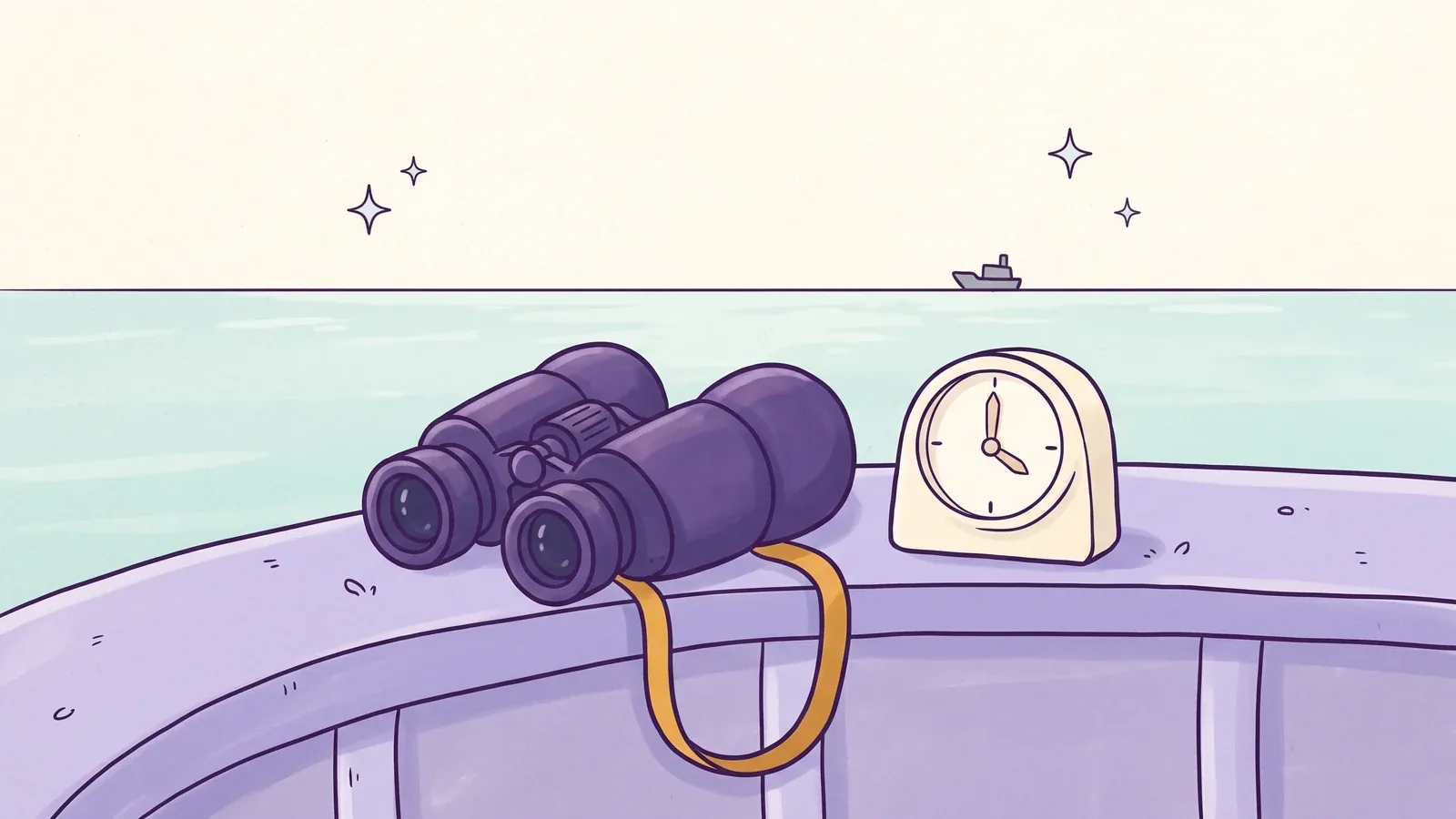
The four rules that apply in every condition of visibility and before any steering rule: what a proper look-out is, what decides a safe speed, how the rules define risk of collision, and what counts as action to avoid collision.
Masthead, sidelights and sternlight and their arcs, then the extra lights that tell you a vessel is fishing, towing, anchored, not under command or restricted — with diagrams for each and the rules they come from.
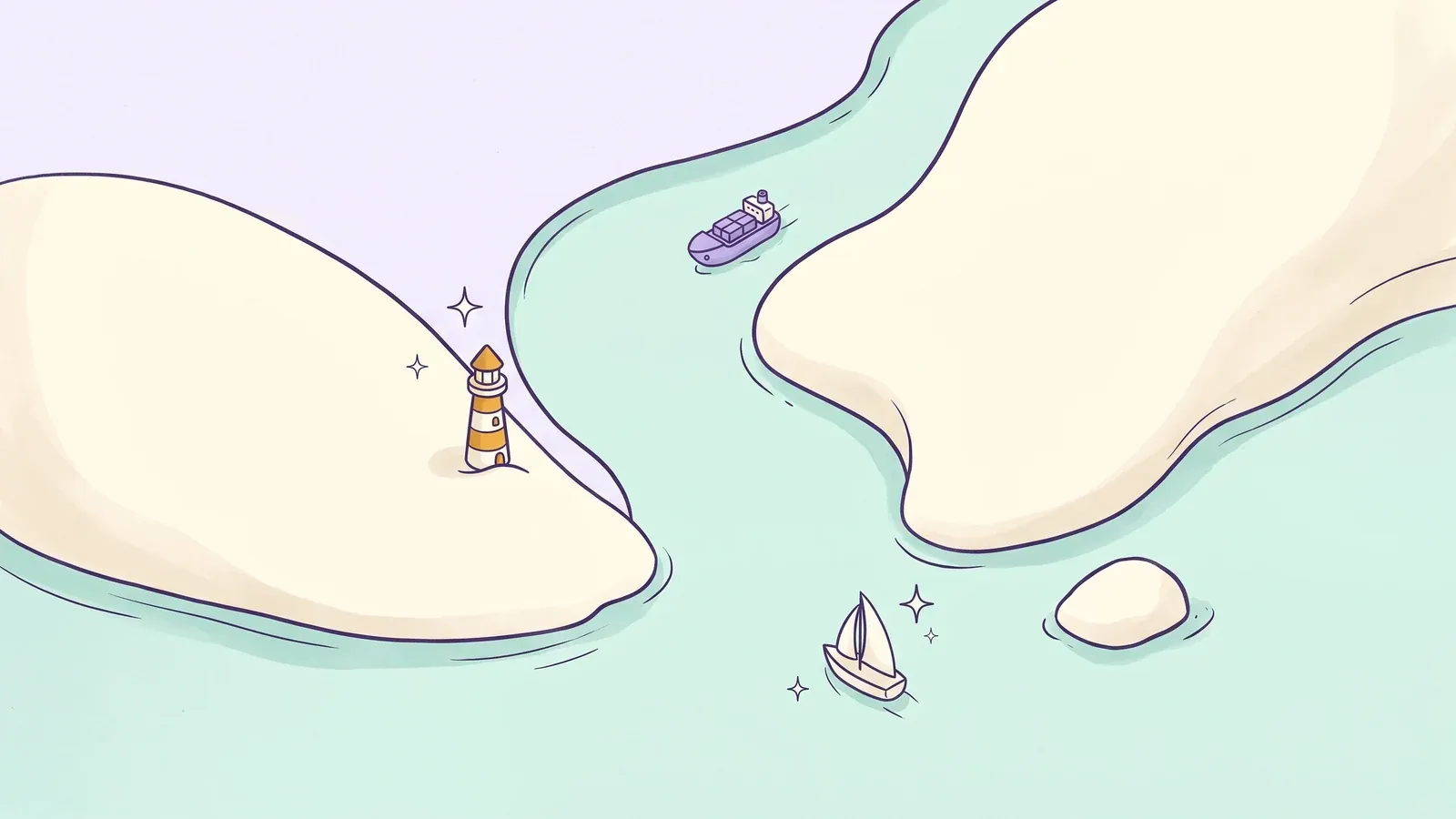
What Rules 9 and 10 require of a yacht or small vessel in a narrow channel or a traffic separation scheme: keep to starboard, do not impede, cross at right angles, use the inshore zone — and what “not impede” means alongside the steering rules.