Boat handling is where theory meets a moving boat: coming alongside under power, the effect of wind and prop walk, and anchoring so the boat stays where you left it. These guides explain the forces at work so the manoeuvres become predictable instead of lucky.
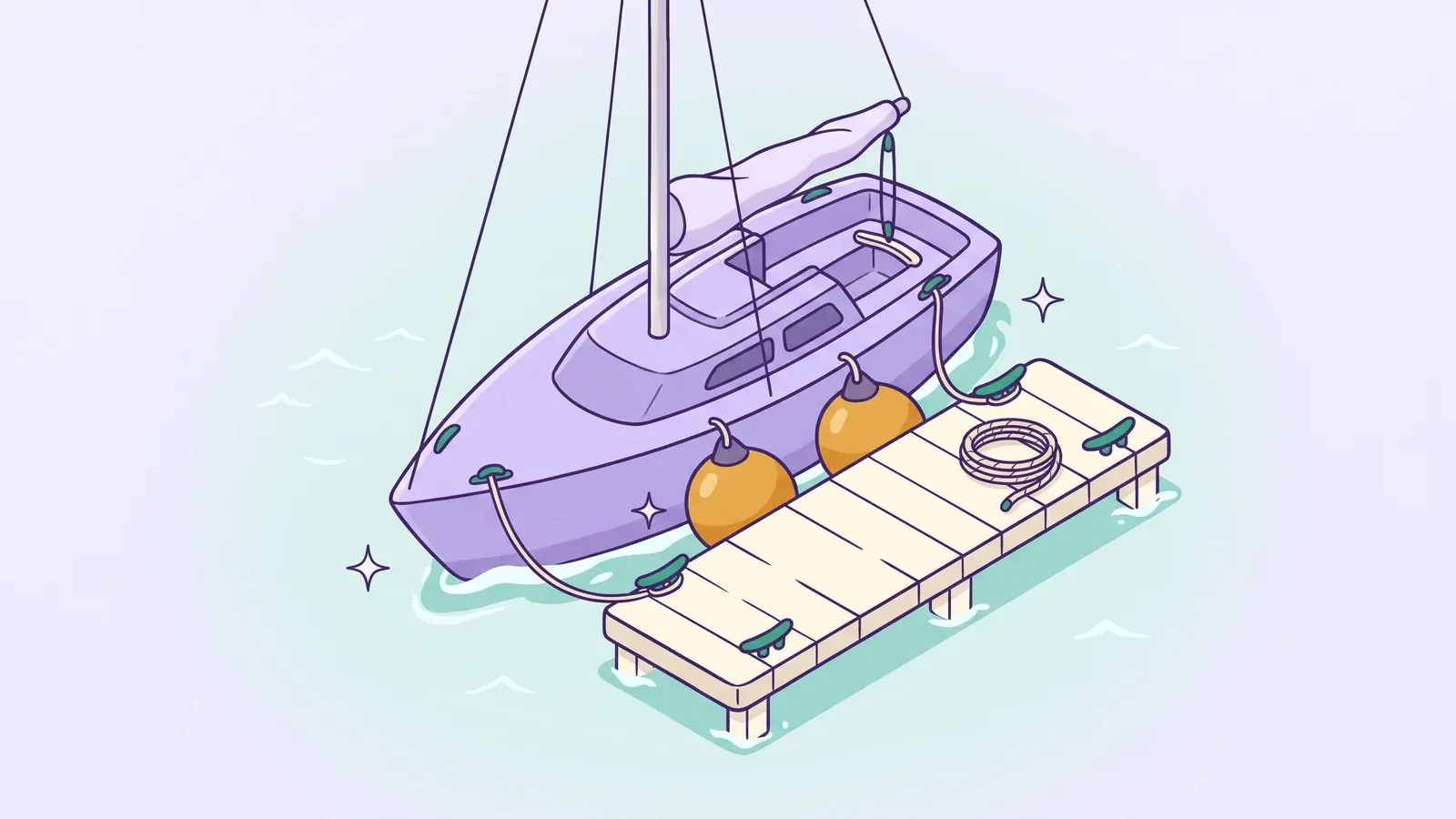
The docking guide works through slow-speed handling — how prop walk kicks the stern sideways, why the boat pivots rather than steers at low speed, and how a spring line lets the engine hold you alongside while you sort everything else out. The anchoring guide covers choosing ground that will hold, deciding how much scope to lay for the conditions, digging the anchor in under power, and checking afterwards that you are actually staying put.
The common thread is planning: decide your approach, your escape route, and who does what before you enter the marina or the anchorage. Examiners call that seamanship; on the water it is simply what makes the manoeuvre look easy.
Ready to test yourself? The Basic Keelboat Theory course turns these topics into 580+ practice questions with explanations.
The physics that decide every docking: momentum and steerage, windage, the pivot point, prop wash and prop walk — then planned approaches for wind on, wind off and crosswind, leaving with a spring, and when to bail out and go around.
How to choose an anchorage, work out scope from depth, tide and bow height (and why the official ratios differ), set the anchor and prove it is holding, and think in swinging circles — with worked examples.